
Can Stress Cause Bloating? Understanding the Gut-Brain Connection
Key Takeaways
The gut and brain are constantly communicating through the gut–brain axis, influencing digestion, bloating, bowel motions, mood and anxiety.
Your gut has its own nervous system called the Enteric Nervous System
Chronic stress can slow gut motility, alter digestive secretions, increase gut sensitivity, and contribute to bloating.
You may think that serotonin (the happy hormone) is produced in the brain… but actually, around 90% of the body's serotonin is produced in the GUT, where it helps regulate digestion and the movement of food through the intestines.
You know that feeling before you speak on stage… when your stomach suddenly feels like it’s full of butterflies?
Or when you’re soooooo hungry that you can’t think straight and jump to feeling irritable, impatient, and a slightly feral hangry mode?
This is your gut and brain communicating at its finest.
And for many people, that same stress response shows up not just as butterflies or hunger swings… but as bloating, abdominal discomfort, and unpredictable digestion.
So if you’ve ever noticed your stomach behaving completely differently during stressful weeks, you’re not imagining it.
This is your gut–brain axis at work.
What Is the Gut–Brain Connection?
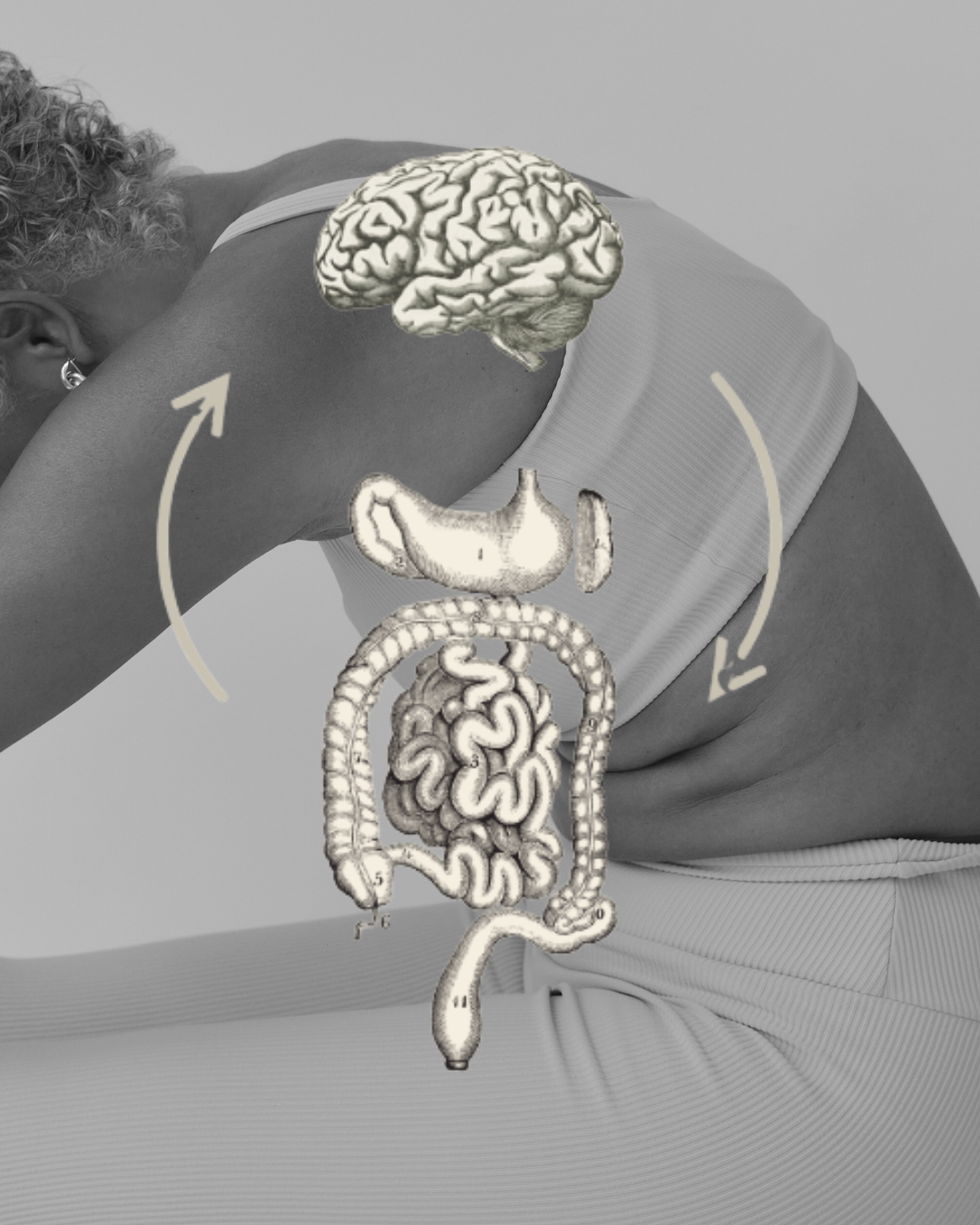
The gut–brain axis is the constant communication system between your brain (central nervous system) and your gut (enteric nervous system).
& YES, your gut literally has its own nervous system.
It’s sometimes called the “second brain,” not because it’s thinking about dinner plans… but because it can operate semi-independently and manage many digestive functions on its own.
These two systems are connected through the vagus nerve, which is like a high-speed communication highway running between your brain and your gut.
Together, they constantly send signals back and forth, regulating:
Digestion
Gut motility (how food moves through you)
Stomach acid and enzyme secretion
Gut sensitivity
Immune activity in the gut
When things are balanced, digestion feels… uneventful. Quiet. Effortless. (The dream really).
But when stress enters the picture, that communication starts to shift.
And your gut tends to be one of the first places it shows up.
The Role of the Microbiome & Serotonin
As if your gut wasn't already impressive enough, the trillions of bacteria living inside your digestive tract are also part of the conversation.
Your gut and brain communicate constantly through neural, immune, hormonal, and metabolic pathways. One of the ways they do this is through the gut microbiome.
Beneficial bacteria help produce and regulate compounds such as serotonin, GABA, and dopamine, which are neurotransmitters that influence mood, stress resilience, and nervous system function.
In fact, around 90% of your body's serotonin is produced in the gut.
While serotonin is often known as the "happy hormone," its primary role in the digestive tract is actually to support gut motility and peristalsis, the wave-like muscle contractions that keep food moving smoothly through the digestive system.
This is one reason why stress and digestive conditions such as IBS are so closely linked.
Research consistently shows that people with IBS often experience higher levels of stress, anxiety, and nervous system dysregulation, while stress itself can worsen symptoms such as bloating, abdominal discomfort, diarrhoea, and constipation.
It's not that stress "causes" IBS in every case, but it can significantly influence how symptoms develop, persist, and flare.
What Happens to Digestion When You’re Stressed?
When your body senses stress (emotional, physical, or psychological) it shifts into “survival mode.”
Also known as: the fight-or-flight response.
Once upon a time, this response helped us run away from genuine danger (like tigers).
These days, it's more likely to be triggered by an unexpected email from your boss, traffic that should absolutely not be taking that long, or a calendar that's somehow booked back-to-back despite your best intentions.
When this happens, your body temporarily prioritises survival over digestion.
Because frankly… digesting lunch is not the priority when the brain thinks there’s a problem that needs solving right now.
One of the first things to change is gut motility. Food moves more slowly through the digestive tract, creating more opportunity for fermentation, gas production, and bloating.
This is why so many people tell me:
"My bloating is always worse after (insert meal)."
It's often not the meal itself. Maybe breakfast is always in a rush, your too busy at work to eat, your rushing to get home in time for dinner. If stress has been accumulating digestion is no longer operating as efficiently.
Stress can reduce the production of stomach acid and digestive enzymes, making it harder to properly break down food.
Many people notice this as a heavy, sluggish feeling after meals.
Others describe it as:
"It feels like food just sits in my stomach."
Stress can also increase sensitivity within the digestive tract, meaning normal amounts of gas or distention become much more noticeable.
This may explain why some people feel significantly more bloated during stressful periods, despite eating exactly the same foods.
In fact, one of the most common things I hear in clinic is:
"I can eat the same foods on holiday and feel completely fine."
And that's often the clue.
When you're on holiday, you're typically sleeping more, rushing less, feeling safer, and spending less time in a heightened stress state. So digestion naturally has more resources available to do its job.
The gut often responds to stress long before we consciously recognise that we're stressed.
Some people lose their appetite completely when they're overwhelmed.
Others notice symptoms ramp up before a presentation, exam, social event, important meeting, or difficult conversation.
Many people simply notice that their digestion feels calmer on weekends than it does during the work week.
These patterns don't mean your symptoms are imagined or "all in your head."
Quite the opposite.
They highlight just how responsive the digestive system is to changes in stress levels, emotional state, and nervous system regulation.
When stress becomes chronic, communication between the gut and brain can become increasingly disrupted. Changes in vagal signalling, altered digestive function, shifts in gut bacteria, and ongoing nervous system activation can all contribute to symptoms such as bloating, nausea, abdominal discomfort, constipation, diarrhoea, or that heavy "stuck" feeling after eating.
If you're trying to understand your digestive symptoms, it can be helpful to look beyond food alone and ask a different question:
“What's been happening in my life when these symptoms show up?”
Because sometimes the missing piece isn't what's on your plate. It's what's happening around it.
Supporting Your Gut-Brain Axis
The good news is that supporting the gut–brain connection doesn't need to involve going to a wellness retreat or meditating for three hours a day.
Small, consistent micro habits can have a surprisingly powerful impact on nervous system regulation and digestive function.
Some of my favourites include:
Slow Belly Breathing
Just 3 rounds of box breathing before eating can help shift the body into a more relaxed "rest and digest" state.
How to: breath in for 6 seconds. hold for 6 seconds. beath out for 6 seconds. hold for 6 seconds. repeat 2 more times.
Journalling (my personal favourite)
If you're someone whose brain loves replaying conversations from three years ago at 2am or creating endless mental to-do lists, journalling can help get those looping thoughts out of your head and onto paper.
Evening Tea Walks
Another one of my favourite rituals is making a warm cup of tea and heading out for a gentle evening walk with a friend, family member, or even just myself. Fresh air, movement, conversation, and nervous system regulation all rolled into one.
& don’t let the weather stop you!!
Yoga Nidra & Meditation
Think of these as workouts for your nervous system. Even short sessions can help reduce stress signalling and support digestive function over time.
Prioritising Sleep
Sleep is one of the most powerful regulators of both the nervous system and the digestive system.
Humming, Singing & Gargling
Ever wondered why humming a baby always works to get them to sleep? These simple activities can stimulate the vagus nerve through vibration of the vocal cords and throat muscles.
Laughter & Connection
Never underestimate the power of feeling safe, connected, and supported. Laughter naturally stimulates diaphragmatic breathing, while positive social connection helps signal to the nervous system that it's safe to relax.
What You Can Do Next
If you've recognised yourself throughout this article, the good news is that you're not doomed to a lifetime of stress bloating.
The gut–brain axis is incredibly dynamic, which means small changes can have a surprisingly big impact on both your nervous system and digestion over time.
While nervous system dysregulation can significantly contribute to bloating, digestive discomfort, and altered bowel habits, other underlying factors may also be involved. Conditions such as SIBO, gut dysbiosis, food intolerances, hormonal imbalances, digestive insufficiency, and IBS can all produce very similar symptoms.
This is why, in clinical practice, I look beyond symptoms alone.
A naturopathic approach aims to understand the bigger picture by exploring digestive function, microbiome health, nervous system regulation, lifestyle factors, stress patterns, and overall health history.
The goal is to understand why your symptoms are happening in the first place and create a personalised plan that helps you feel like yourself again.

Bianca is a Clinical Naturopath who is passionate about giving women the answers they deserve. Through an individualised and investigative approach, she helps women understand the connections between digestion, hormones, skin, nervous system, lifestyle, and overall wellbeing.
Related Reading
You may also find these helpful…




LOOKING FOR BESPOKE HEALTHCARE?
Every person's digestive symptoms are different. While articles like this can provide general education, understanding what's driving your symptoms often requires a comprehensive assessment of your health history, diet, lifestyle, stress levels, and digestive function.
